Traditionally, retirement planning was the primary reason people sought advice.
In 2026, that changed.
Financial advice is increasingly about helping people make confident decisions, not just managing investments.
What Clients Value Most
The research found that clients place the greatest value on advisers who can provide:
Expertise
The strongest driver of client satisfaction is an adviser’s technical and emotional expertise.
Clients value advisers who can combine knowledge of:
- Superannuation
- Investments
- Retirement planning
- Tax strategies
- Aged care
- Estate planning
- Centrelink
with the judgement needed to apply those strategies to real-life situations. Expertise was rated as the single most important factor influencing client satisfaction in the 2026 research.
Trusted Relationships
Trust remains the most important attribute clients look for in a financial adviser.
Advice is built on long-term relationships, and the research found:
- 76% of advisers report client relationships lasting more than 10 years
- 67% of clients speak with their adviser three or more times per year
- Financial advice achieved a Net Promoter Score of +45, comparable with many of Australia’s most trusted consumer brands
These findings demonstrate that advice is not a one-off transaction. It is an ongoing partnership.
Guidance Through Important Decisions
Many of the most valuable financial decisions cannot be measured in percentages or investment returns.
Should you:
- Help your children into the property market?
- Pay down debt or invest?
- Retire earlier or continue working?
- Support ageing parents?
- Draw down super or preserve it longer?
One of the most important roles of a financial adviser is helping you understand the trade-offs and make informed decisions that align with your goals and values.
The Value You Can Measure
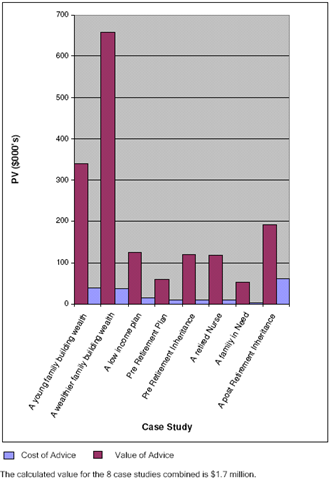
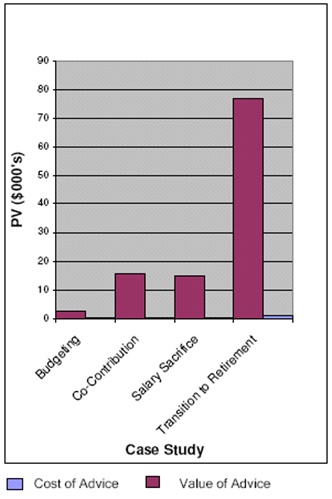
For almost a decade, Russell Investments has measured the financial value advisers add through its Value of an Adviser framework.
The research estimates that professional financial advice can add at least 5.5% per annum in value through:
A | Appropriate Asset Allocation (1.5%)
Ensuring your investments are aligned with your goals, timeframes and tolerance for risk.
B | Behavioural Coaching (2.8%)
Helping you stay disciplined during market volatility and avoid emotional investment decisions that can damage long-term outcomes. Behavioural coaching remains one of the largest contributors to long-term client outcomes.
C | Choices and Trade-Offs
Helping you navigate life’s complex financial decisions and competing priorities. This value is highly personal and different for every client.
E | Expertise
Providing technical and emotional expertise developed through years of education, experience and real-world problem solving. The 2026 research identified expertise as the strongest contributor to client satisfaction.
T | Tax-Savvy Planning (1.2%)
Using tax-effective strategies across superannuation, investments and retirement planning to improve long-term outcomes.
The Benefits Extend Beyond Investment Returns
The research found advisers increasingly define their value through outcomes such as:
- Peace of mind
- Reduced financial stress
- Greater confidence
- Better decision making
- Improved financial control
- Ongoing reassurance during uncertain times
In fact, advisers were nearly ten times more likely to say their primary role is managing client relationships than selecting investments.
That reflects what many clients tell us at Priority1.
The greatest value often comes from having someone in your corner who understands your situation, helps you avoid costly mistakes and gives you confidence that you’re making informed decisions.
Why Professional Advice Still Matters in the Age of AI
Artificial intelligence is becoming increasingly common in financial services.
However, the research found that technology is not reducing demand for advice.
In fact, 26% of non-advised Australians said AI makes them more likely to seek professional financial advice.
While technology can provide information, it cannot replace:
- Personal judgement
- Understanding family dynamics
- Navigating major life events
- Emotional support during difficult decisions
- Tailored strategic advice
The future of advice is likely to combine the best of technology with the human expertise and trusted relationships that clients value most.
How Priority1 Helps
At Priority1 Wealth Management Group, we believe financial advice should deliver more than investment performance.
Our goal is to help you:
- Clarify your goals
- Make informed financial decisions
- Reduce financial stress
- Navigate life’s major transitions
- Structure your affairs tax effectively
- Build confidence in your financial future
Most importantly, we aim to provide the reassurance that comes from knowing you have a trusted adviser helping guide you through every stage of life.
Because great advice is not just about growing wealth.
It’s about helping you feel confident about where you’re heading and knowing you’re on the right path.
This article is based on Russell Investments’ 2026 Value of an Adviser research, which surveyed advised investors, non-advised investors and financial advisers across Australia in April and May 2026.